
What is an EMG?
Most people are familiar with CAT scans or MRIs. EMG tests are another diagnostic tool that are, perhaps, not as well known.
What Is An EMG/NCS?
EMGs and Nerve Conduction Studies (NCSs) are diagnostic procedures that are often done at the same time and are used to assess the health of the muscles and the nerve cells (motor neurons) that control them. Because motor neurons transmit electrical signals that cause muscles to contract, an EMG can record these and turn the signals into sounds, graphs, or numerical values to be interpreted.
During an EMG, a needled electrode is inserted into a muscle to record the electrical activity. The activity is recorded muscle during rest, slight contraction, and forceful contraction. This data used to help detect any neuromuscular abnormalities.
In a NCS, electrodes are taped to the skin and the speed and strength of signals between two points is measured. When a signal travels at a slower rate that it should, the nerve may be damaged.
Why Might Your Doctor Order An EMG/ NCS?
Typically, these tests are used to diagnose a nerve or muscle disorder, so a doctor may order them if he/she is looking for an explanation for the following:
- Tingling
- Numbness
- Muscle weakness
- Muscle pain or cramping
- Some types of limb pain
- Involuntary twitching
- Paralysis
What Are EMGs Used For?
They are used, in connection with other tests, to diagnose or rule out muscle disorders, nerve disorders, or disorders affecting the connection between the two, including:
- Muscular dystrophy
- Radiculopathies (when it involves motor fibers)
- Herniated discs
- Spinal stenosis
- Carpal tunnel syndrome
- Cubital tunnel syndrome
- Neuropathies
- Pinched nerves
- ALS
- Guillain-Barre syndrome
- Myasthenia gravis
- How well a patient is recovering from a nerve injury
While who is authorized to perform EMGs varies by state, EMGs/NCSs are typically performed by a specialist or a specially trained physician, usually a neurologist, qualified to interpret the data.
These posts are for informative purposes only and should not be used as a substitute for consultation with and diagnosis by a medical professional. If you are experiencing any of the symptoms described above and have yet to consult with a doctor, do not use this resource to self-diagnose. Please contact your doctor immediately and schedule an appointment to be evaluated for your symptoms.
References:
Mayoclinic.com
Webmd.com
Healthline.com
Providence.org
Cubital Tunnel Syndrome
In previous posts, we’ve discussed several chronic conditions that can affect dentists in particular, as their jobs require them to hold unnatural, static positions for extended periods of time while continuously gripping instruments. This puts tremendous stress on their musculoskeletal systems, especially their hands, and this is, in part, why dentists experience nearly four times the prevalence of hand, wrist and arm pain found in the general public.
While most dentists and surgeons are likely familiar with carpal tunnel syndrome, there are other conditions affecting the hands that can be just as debilitating. In this post we will examine the causes, diagnosis, symptoms, and treatment of cubital tunnel syndrome, a similar condition that arises from nerve impingement at the elbow.
Overview
Cubital tunnel syndrome is a condition that involves pressure or stretching of the ulnar nerve (also known as the “funny bone” nerve) that runs in a groove on the inner side of the elbow. This can cause numbness or tingling in the ring and small fingers, pain in the forearm, and/or weakness in the hand. Those suffering from cubital tunnel syndrome can find it difficult or impossible to function with the same level of dexterity that they used to have.
Causes
Cubital tunnel syndrome occurs when the ulnar nerve becomes compressed or irritated at the elbow, but the exact cause of this is often unknown. There are several factors that can lead to nerve irritation such as:
- Keeping your elbow bent for long periods of time
- Repeatedly bending your elbow
- Leaning on your elbow for long periods of time
- Repetitive activities that require the elbow to be flexed
- Prior fractures or dislocations of the elbow
Diagnosis
In order to diagnose cubital tunnel syndrome, a physician will perform a medical history review and physical examination. The examination will include an evaluation of the sensation of the hand and fingers as well as a test of your elbow reflex. Additional screening may be required, including:
- X-rays: to check for bone spurs, arthritis, or other places that the bone may be compressing the nerve
- Nerve conduction studies: to determine how well the nerve is working and to help identify where it is being compressed
- Electromyogram: a test that measures the electrical discharges produced in the muscles
Symptoms
Generalized symptoms of cubital tunnel syndrome include:
- Numbness and tingling in the ring finger and pinky finger, usually occurring when the elbow is bent (such as when driving or holding a phone)
- Feeling of pins and needles or the feeling of the hand “falling asleep” in the ring and pinky finger
- Weakening of the grip and difficulty with finger coordination, especially when manipulating objects
Severe symptoms can include:
- Weakness in the ring and little fingers
- Decreased hand grip
- Muscle wasting in the hand
- Curling up of the pinky and ring finger along with pain, or a claw-like deformity of the hand
Treatment
Mild symptoms of cubital tunnel syndrome can be managed with home remedies such as:
- Avoiding activities that require you to keep your arm bent for long periods of time
- Avoiding leaning on your elbow or putting pressure on the inside of your arm
- Keeping your elbow straight at night when sleeping by wrapping a towel around your elbow or wearing an elbow pad backwards
- Performing nerve gliding exercise
More severe cases of cubital tunnel syndrome may require medical interventions such as:
- Use of non-steroidal anti-inflammatory drugs (NSAIDs) to reduce swelling around the nerve
- Use of corticosteroids
- Bracing or splinting
- Surgery to increase the size of the cubital tunnel or to transpose the nerve in order to relieve the pressure
These posts are for informative purposes only and should not be used as a substitute for consultation with and diagnosis by a medical professional. If you are experiencing any of the symptoms described above and have yet to consult with a doctor, do not use this resource to self-diagnose. Please contact your doctor immediately and schedule an appointment to be evaluated for your symptoms.
References:
American Society for Surgery of the Hand, http://www.assh.org
American Academy of Orthopaedic Surgeons, https://orthoinfo.aaos.org/
Mayo Clinic, www.mayoclinic.org
WebMD, www.webmd.com
Healthline, www.healthline.com
Dental Products Report, dentalproductsreport.com
Multiple Sclerosis
Multiple sclerosis (MS) is a disease of the central nervous system, which is made up of the brain, spinal cord, and optic nerves. It’s estimated that 2.3 million people worldwide have MS. In this post we’ll examine the symptoms, causes, diagnosis, and treatment of this disease.
Overview
With MS, the immune system begins to attack the protective sheath, called myelin, that covers the nerve fibers. The result is faulty communication between the brain and the rest of the body. The disease may eventually cause the nerves deteriorate and they may even become irreversibly damaged.
The symptoms experienced and the rate of progression and severity of the disease will vary greatly from person to person. Some individuals may have a very minor form of MS, while others will go on to become paralyzed, or, in rare instances, have a potentially fatal form that progresses rapidly from onset.
MS has several difference courses, in terms of how the disease progresses:
Relapse-Remitting MS: Most people with MS experience times of new symptoms, or relapses, that develop in a relatively short period of time followed by periods remission where there are few or no symptoms.
Secondary-Progressive MS: About 60 to 70% of people with relapse-remitting MS type will go on to experience a steady progression of symptoms.
Primary-Progressive MS: Some individuals have a gradual onset and progression of symptoms without relapses.
Benign MS: MS is considered benign if the individual has no relapses and a mild, stable disability after about 15 years from the time of diagnosis.
Symptoms
Because MS attacks the central nervous systems, a wide range of symptoms in nearly any function can occur. Symptoms will also vary in type and severity from one person to another. Symptoms can resolve, come and go, or be permanent. Common symptoms include:
- Blurred vision
- Partial or complete loss of vision
- Loss of balance
- Poor coordination
- Dizziness or vertigo
- Slurred speech
- Tremors
- Tingling
- Electric shock sensations
- Numbness or weakness
- Extreme fatigue
- Depression
- Temperature sensitivity
- Memory and concentration problems
- Paralysis
Causes and Risks Factors
While the cause of MS is unknown, many believe it is a mix of genetics and environmental factors. Scientists have identified several risk factors that may be associated with MS:
- Genetics and family history
- Gender (women are 2 to 3 times more likely to develop MS)
- Age (most people are diagnosed between the ages of 20-50)
- Certain infections, including the Epstein-Barr virus
- Certain autoimmune diseases, including type 1 diabetes or thyroid disease
- Smoking
Diagnosis
MS is often a hard disease to diagnose, especially because symptoms vary from person to person, can come and go, and are similar to other disorders of the nervous system. While there is no single diagnostic test, there are several methods physicians use to evaluate individuals for MS, including:
- Blood tests to screen for other diseases with similar symptoms (e.g. Lyme disease)
- Balance, coordination, vision, and other tests to see how the nerves are functioning
- MRIs to detect changes in the brain (lesions) and/or spinal cord
- Evoked potentials tests, which evaluate electrical activity in the brain
- Analysis of the cerebrospinal fluid (CSF) in the brain and spinal cord for specific proteins
- Spinal tap to look for abnormalities in antibodies, and look for infections or other conditions with similar symptoms
Treatment
At present, there is no cure for MS. However, there are several treatments doctors utilize in an effort to manage symptoms, shorten the length of attacks, and modify the progression of symptoms. Some of them are listed below.
Treatment to Modify Progression
- Medications to curb the body’s immune system to attempt to stem the body’s attack on the myelin
Treatment for MS Attacks
- Corticosteroids to reduce nerve inflammation
- Muscle relaxants
- Plasma exchange
Treatments for Symptoms
- Medications (fatigue, depression, and other symptoms)
- Muscle relaxants
- Physical therapy
- Staying cool, sometimes with devises such as a cooling vest (symptoms often worsen when body temperature rises)
- Alternative medicine (acupuncture, massage, relaxation techniques)
- Exercise and reducing stress
Treatment will often involve an interdisciplinary approach and may require treatment from a care team including neurologists, physiatrists, urologists, psychiatrists, physical and occupational therapists, and others as needed.
These posts are for informative purposes only and should not be used as a substitute for consultation with and diagnosis by a medical professional. If you are experiencing any of the symptoms described below and have yet to consult with a doctor, do not use this resource to self-diagnose. Please contact your doctor immediately and schedule an appointment to be evaluated for your symptoms.
References
National Multiple Sclerosis Society, https://www.nationalmssociety.org
Mayo Clinic, https://www.mayoclinic.org
John Hopkins Medicine, https://www.hopkinsmedicine.org
WebMD, https://www.mayoclinic.org
Firm Named #1 Law Firm for Best Workplace Culture
We are proud and honored to announce we have been named Arizona’s #1 Law Firm for Best Workplace Culture and the #2 firm in both Healthcare Law and Firm with Under 22 Lawyers by Ranking Arizona: The Best of Arizona Business. Ranking Arizona publishes the results of the largest annual poll of the Arizona business community. Residents are asked to share their opinions of the best products, services, and individuals in the state.
We’ve earned this distinction through the development and execution of studied, meticulously considered strategies aimed at obtaining optimal results for our clients. We have also remained a small firm in order to encourage the sharing of ideas and information in an environment fostered by mutual trust. We pride ourselves on recruiting only the top attorneys in education, skills, and temperament.
We offer dentists, physicians, and other professionals compassion, thoughtful and meticulous legal representation, and are dedicated to making the claims process as painless as possible for each client. Our Firm offers unparalleled strategy, advocacy, and adaptability. Our clients have immediate attorney access, including their direct telephone lines and emails. Each case has a minimum of two attorneys and a paralegal working on it, with senior partners directly involved in developing each case.
Our keen legal, medical, and disability industry insight allows us to know what really matters in a case, and we are able to leverage this experience to deliver success. We are pleased that our dedication has earned us this recognition for both our legal expertise and our firm’s collaborative ethos, which allows us to work together tirelessly in order to exceed our clients’ most optimistic expectations.
Why You Can’t Blindly Rely on Your Agent to Choose the Right Policy for You
In earlier posts we’ve discussed how agents don’t have the authority to change, delete, or add provisions to a disability insurance policy. We’ve also discussed how most disability insurance policy applications now contain language stating that you cannot rely upon representations made by agents regarding the scope of coverage, or eligibility for coverage. Thus, while agents can provide helpful advice and help to point you in the direction of a disability insurance policy that may fit your needs, it is ultimately up to you, the purchaser, to review your policy, become familiar with the provisions of the policy, and confirm that you are in fact purchasing the coverage that you expected to receive.
If you don’t take the time to do this, and blindly pay premiums without reviewing your disability insurance policy first, you could end up paying for coverage that provides less protection than you thought you were getting when you applied for the policy. For example, most physicians and dentists know that their disability insurance policies should be “own occupation”, meaning a policyholder is considered totally disabled (and eligible to collect benefits) when he or she can no longer work in his or her profession, versus being unable to work at all, in any profession. In some policies, own occupation is further defined as being unable to practice in a particular medical or dental specialty (i.e. anesthesiologist, periodontist, etc.).
Quite often physicians and dentists decide to buy another policy, either because they let a previous one lapse, or because they want to purchase additional coverage as their income increases and they can afford higher premiums, and they ask their agent for a new policy with the “same coverage”. This can be incredibly difficult or impossible to achieve, because over time disability insurance policies have evolved to become more restrictive, and each company has variations on what they deem an “own occupation” policy. Consequently, while your agent may present you with a policy that contains the phrase “own occupation”, it may not be a true own occupation policy at all.
For example, some policies are actually conversion policies, which mean they start out as “own occupation” policies, but after a certain time frame (e.g 2 years, or 5 years), they change to an “any occupation” policy, which means that, in order to continue receiving disability benefits, you would have to show that you can’t work at all. This can be very difficult to prove, particularly if you worked in another capacity for all or some of the prior “own occupation” period.
Even if your agent does locate an own occupation plan with similar premiums and benefit amounts to an older policy, there may also be provisions that cancel each other out in the new and old policies. One scenario we’ve seen is a disability insurance policy containing the provision that a claimant must not be working (a “no work” provision) in their own occupation or another profession in order to collect benefits, while the second policy states that a claimant must not be working in their own occupation but must be working in another field in order to collect benefits (a “work provision”). Under this scenario, in essence, one of the policies you’ve been paying years of premiums for is worthless, as both requirements cannot be met at once.
These examples highlight why it is important that you do more than just check an “own-occupation” box on your application and/or blindly rely on your agent’s assurance that a new policy is compatible and/or the same as an existing one. If you end up with a policy you essentially cannot use, your recourse is limited, as insurance companies have gone to significant lengths to shield themselves from any liability based on an agent’s representations of a policy. It is therefore far better to take the time to review your policy at the outset, before you pay years of premiums, to ensure that it provides the disability coverage that you applied for and need.
Diabetes: An Overview
We’ve talked before about how diabetes can occur in conjunction with other diseases, such as anxiety, or contribute to certain medical conditions, such as radiculopathy. In this post we will be taking a broader look at diabetes and its complications.
Overview:
Diabetes (diabetes mellitus) refers to a group of diseases, including prediabetes, type 1, type 2, and gestational diabetes. While prediabetes and gestational diabetes can be reversible, types 1 and 2 are chronic and there is currently no cure.
Diabetes can occur either when the pancreas produces very little or no insulin, or when the body does not respond to the insulin that the pancreas does produce. In this post we will examine only types 1 and 2.
Type 1 diabetes typically appears during childhood or adolescence (it is also called juvenile diabetes), and the symptoms come on quickly and are more severe. Type 2 diabetes is more common, and more often occurs in people over 40 (it is often referred to as adult onset diabetes). Those with type 2 diabetes may not exhibit symptoms at first.
Symptoms:
- Increased thirst
- Extreme hunger
- Frequent urination
- Unexplained weight loss
- Ketones in the urine
- Fatigue
- Irritability
- Blurred vision
- Difficulty breathing
Additional symptoms experienced in Type 2 diabetes include:
- Cuts or sores that are slow to heal
- Infections
- Itchy skin (often in the groin area)
- Recent weight gain
- Numbness or tingling of the hands and feet
- Impotence or ED
Causes:
Type 1 diabetes occurs when the body’s immune system destroys the insulin producing cells of the pancreas. Scientists believe that Type 1 is caused by genetic and environmental factors, such as exposure to certain viruses.
Type 2 diabetes is caused primarily by lifestyle factors and genes. Some risk factors include:
- Being overweight
- Lack of physical activity
- High blood pressure
- Abnormal cholesterol and/or triglyceride levels
- Family history (having a parent or sibling with diabetes increases risk)
- Age
- History of gestational diabetes while pregnant
- Polycystic ovary syndrome
Diagnosis:
Diabetes can be diagnosed based on blood tests that show a patient’s blood sugar levels, using a glycated hemoglobin (A1C) test, random blood sugar test, fasting blood sugar test, and/or an oral glucose tolerance test.
With respect to type 1 diabetes, a patient’s urine will be analyzed for ketones, a byproduct produced when muscles and fat are used for energy when the body doesn’t have enough insulin to use available glucose.
Treatment:
While there is no cure for diabetes, ongoing monitoring and management of symptoms is required to prevent serious complications from occurring. Possible treatments include:
Lifestyle changes
- Diet/healthy eating
- Exercise
- Weight loss
Medication
- Those with Type 1 diabetes must take insulin because it is no longer made by the body
- Those with Type 2 may need to take insulin, but may also take different medications (such as metformin, which lowers the amount of glucose the liver makes)
Surgery
- Bariatric surgery
- Artificial pancreas
- Pancreatic islet transplantation
Serious Complications:
Undiagnosted, untreated, or resistant to treatment, diabetes can have serious health consequences, including:
- Cardiovascular disease;
- Nerve damage (neuropathy), especially in the limbs (which left untreated can result in loss of feeling); nerve damage is also connected to problems with internal organs, weakness, weight-loss, and depression;
- Kidney damage (nephropathy), which may result in the eventual need for dialysis or kidney transplant;
- Eye damage (retinopathy), which may result in cataracts, glaucoma, or blindness;
- Skin conditions, including bacterial and fungal infections;
- Foot damage, which can often lead to the need for amputation;
- Depression; and
- Alzheimer’s disease (type 2 diabetes)—currently there is no agreed upon theory about why there is a correlation between the two diseases.
These posts are for informative purposes only and should not be used as a substitute for consultation with and diagnosis by a medical professional. If you are experiencing any of the symptoms described below and have yet to consult with a doctor, do not use this resource to self-diagnose. Please contact your doctor immediately and schedule an appointment to be evaluated for your symptoms.
References:
Center for Disease Control (CDC), www.cdc.gov
WebMD, webmd.com
Mayo Clinic, mayoclinic.com
National Institute of Diabetes and Digestive and Kidney Disease, www.niddk.nih.gov
American Diabetes Association, www.diabetes.org
How Do I Know if My Insurer Might Be Interested in a Lump Sum Settlement?
We are often asked whether a particular claim is the type of claim that an insurance company would be interested in settling for a lump sum buyout. The answer, as explained in more detail below, is always, it depends, because there are a number of factors that come into play, and many of those factors are not even directly related to whether the claim itself is legitimate or whether the insured’s condition is permanent (although those are important factors that impact whether a buyout is a possibility).
What is a Lump Sum Buyout?
You may be familiar with the terms of your disability policy, but you may not know that, in certain instances, insurers are willing to enter a lump sum settlement. Under a lump sum settlement, your insurer agrees to buy out your policy and, in return, you agree to surrender the policy and release the insurer from any further obligations to you going forward.
There are certain pros and cons to this sort of settlement. Some claimants prefer a lump sum settlement, because it allows them to avoid having to rely on month-to-month payments from their insurer (which may or may not arrive, or if they do arrive, may not arrive on time) and/or to avoid the hassle of dealing with claim forms, medical exams, etc. for years to come. A lump sum settlement can also allow you to take advantage of present investment opportunities that can provide for your and your family’s future. But there are also other considerations that you will need to discuss with your attorney as well as your accountant and other financial advisors. For example, if your benefit period lasts to age 65 (and you end up living to the end of the benefit period), you would likely receive more money cumulatively over time if you stayed on claim and received monthly benefits in lieu of a lump sum settlement.
Lump sum settlements can also be attractive to insurance companies. A settlement can allow insurance companies to release money from their reserves and to eliminate administrative expenses associated with the ongoing review of your claim year after year. But just as you might receive more money cumulatively over time if you stayed on the claim, the insurer might benefit financially from not offering you a lump sum settlement. For example, if your policy provided for lifetime benefits, and you met an untimely demise, your insurance company’s obligation to pay benefits would cease, and they may end up ultimately paying out a lower amount in total monthly benefits than they would have if they paid out a lump sum settlement on your claim.
Because this process is completely discretionary on their part, insurance companies are very deliberate about offering lump sum settlements. Before doing so, they must weigh multiple factors including the following:
-
- Permanency. The insurer is more likely to offer a settlement if its actuaries determine that you will likely be on claim for the maximum benefit period.
-
- Reserves. Over the course of your claim, your claim’s reserves slowly peak as you are on claim for an extended period of time (and permanency is established) and then at some point, they start to diminish as the claim is paid out, and you get closer and closer to the end of the maximum benefit period. The insurer is more likely to offer a settlement when the reserves are at their peak (typically around 3-5 years into a claim), because that is when the insurance company would improve its bottom line the most by freeing up the reserves.
-
- Mortality/Morbidity Issues. The insurer is more likely to offer a settlement if its actuaries determine that you will probably live to the end of the maximum benefit period. Or if you have lifetime benefits, the insurer will estimate your lifespan based on your health history to determine whether it is financially beneficial for the company to offer a lump sum settlement.
-
- Offsets. The insurer is more likely to offer a settlement if it determines that you will probably not receive income in the future that would offset the benefit amount before the end of the maximum benefit period.
-
- Anticipated Gain. Companies will not offer a buyout unless they stand to save money in the long run, so they have their actuaries calculate how much of a gain (percentage-wise) the company would net if they settle the claim. Insurers often have internal financial objectives that impact the amount they are willing to offer on settlements such as requiring a net gain amount of a certain percentage (e.g. 35%).
-
- Cash Outflow. The insurer will be more or less willing to offer a settlement depending on their quarterly or even annual cash outflows. Thus, if a company had paid out a lot of buyouts recently, the company may not have enough cash available to offer additional lump sum settlements.
The bottom line is that offering a lump sum settlement is completely voluntary on the part of the insurer and doing so depends on the unique factual circumstances of your claim. Nevertheless, knowing the factors that insurers consider in making this decision can help you understand whether a lump sum settlement is appropriate in your case.
The Importance of Reviewing Your Policy Application
In our last post we discussed why you should not rely solely on your agent’s representations when purchasing a new disability insurance policy. It is similarly important that you not rely solely on your agent to complete the policy application.
While an agent may offer to help you by filling out the disability insurance application, this could end up negatively impacting a future claim or even voiding your policy down the road, if the application contains any errors or omissions. As explained in our prior posts, while it may seem like telephone interviewers, licensed representatives, agents, and medical examiners have significant control over the application process and whether you receive a disability insurance policy, many applications have language that explicitly limits your ability to rely upon representations made by such individuals, and expressly places the burden of reviewing the application for accuracy upon you (regardless of who completed the application). Below is a sample of policy language:
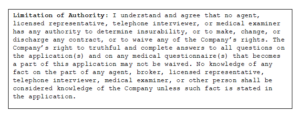
Thus, you may speak with several people during the application process, and give them the requested information, but it is ultimately up to you to make sure the information provided to the insurance company is correct. It is therefore very important that you read through your disability insurance application carefully to make sure it is complete and accurate before signing.
It is also very important that you carefully review your disability insurance policy when you receive it from the insurance company, and not just file it away without a second thought. When you receive your copy of the full policy, it will typically contain language stating that you have a certain time period (e.g. 10 or 30 days) to review the policy and return it to be voided if it does not contain the terms you expected. This clause will normally be found on the first page of the policy, and typically looks something like this:

If you decide to keep your disability insurance policy and do not send it back within this review period, you are bound by all provisions of the policy, regardless of whether you are actually aware of them or not. For instance, if you asked your agent for a certain provision and/or requested it on your disability insurance application, but the insurance company omits it for some reason, and you don’t catch it during this review period, you may end up paying years of premiums for coverage that is different than what you thought you had purchased. Similarly, if your policy contains an unfavorable provision that you didn’t know was going to be in the policy, you will still be bound by it unless you return the policy.
How Insurance Companies Distance Themselves from Agents (And Why It Matters)
Reading through contracts, especially lengthy insurance ones, can be time consuming. Many policies contain confusing language, terms of art, and often include supplemental riders that change the terms or definitions contained in the main body of the policy. But if you don’t read your disability insurance policy until it’s time for you to file a disability claim, you may be caught off-guard by what your policy actually says. This next series of posts will discuss the importance of taking the time to read through your policy, and will review some things to watch out for when you buy a disability insurance policy.
Dentists and physicians are often swamped with work, and rely heavily on insurance agents when selecting and purchasing a disability insurance policy. One scenario we commonly see is doctors requesting a disability insurance policy that is “the same” policy that the other doctors in the practice have. Another common scenario is the doctor who wants more disability coverage and just asks his or her agent for another disability insurance policy that is “like” his or her existing policy, or has the “same coverage” as his or her existing policy. What they don’t realize is that some of the same favorable terms may no longer be available in today’s policies. For example, while most older disability insurance policies contained “true own occupation” provisions, there are now several different variations of “own occupation” provisions, so if you just ask for an “own occupation” policy, you may not actually be receiving the disability coverage that you think you are.
It is also important to be aware that, over the years, disability insurers have sought to distance themselves from agents and now often go so far as to include clauses or statements in their disability insurance policies and applications that state no agent or broker has the authority to determine insurability or make, change, or discharge any contract requirement. Here’s an example of this type of policy language:

So what does this mean? It means that, while solely relying upon an agent’s assurance of the terms of a policy may have been a more acceptable (but not advisable) option in the past (when policies were often similar and generally favorable to policyholders), you can no longer solely rely upon your agent’s description of the policy. No matter how well-meaning or knowledgeable your agent may seem, ultimately, you are going to be on the hook if your disability insurance policy doesn’t say what you thought it said, so it is crucial that you carefully review your disability policy to ensure you are receiving sufficient coverage.
Our next post will discuss the importance of the disability application process and policy review period.
What is a Neuropsychological Evaluation? – Part 1
We’ve talked before about how your insurance company may require you to undergo an independent medical examination (IME) by a physician of their choosing and how they may also ask for a Functional Capacity Evaluation (FCE).
Neuropsychological evaluations are another tool insurers utilize when investigating disability claims. A neuropsychological evaluation is also something that a claimant filing a disability claim may choose to undergo independently, to provide additional proof of his or her disability. In this series of posts, we will be talking about what a neuropsychological evaluation is, what to expect during an examination, and how an exam could affect your disability claim.
What is a Neuropsychological Evaluation?
Neuropsychology is the study of the relationship between the brain and behavior. A neuropsychological evaluation is a method of testing where a neuropsychologist seeks to obtain data about a subject’s cognitive, behavioral, linguistic, motor, and executive functioning in order to identify changes that are, often, the result of a disease or injury. The evaluation can lead to the diagnosis of a cognitive deficit or the confirmation of a diagnosis, as well as provide differential diagnoses.
Neuropsychological evaluations are most often associated with conditions that exhibit cognitive dysfunctions, such as:
- Multiple sclerosis
- Alzheimer’s
- Epilepsy or seizures
- Psychological and mental health disorders
- Chronic pain
- Head injuries
- Stroke
- Parkinson’s disease
- Neurodegenerative diseases
- Side effects of medication
Conditions such as those enumerated above often have symptoms that vary person by person, and the amount of cognitive impairment can often not be fully assessed by other diagnostic tools such as an MRI, or a traditional psychological evaluation.
Neuropsychological tests are standardized tests that are given and scored in a similar manner each time they are used. The tests are designed to evaluate the following:
- Intellectual Functioning
- Academic Achievement
- Language Processing
- Visuospatial Processing
- Attention/Concentration
- Verbal Learning and Memory
- Executive Functions
- Speed of Processing
- Sensory-Perceptual Functions
- Motor Speed and Strength
- Motivation
- Personality
There are many different accepted tests for each domain listed above. Accordingly, an examiner will likely not perform every test, but rather select tests from each category that will best evaluate the particular question posed by the referrer.
The goal of these neuropsychological tests is to produce raw data. The results are then evaluated by comparing test scores to healthy individuals of a similar background (age, education, gender, ethnic background, etc.) and to expected levels of cognitive functioning. The data is then interpreted by the neuropsychologist, and perhaps other providers, to determine the strengths and weaknesses of the subject’s brain, provide suggestions for potential treatment options, set a standard for any future testing, evaluate a course of treatment, make recommendations on steps and modifications that can improve daily living, and evaluate whether a subject can return to work with or without modifications.
In our next post we will go look at what you can expect during a neurospychological evaluation.
Sources:
Atif B. Malike, MD; Chief Editor, et al., Neuropsychological Evaluation, Medscape, http://emedicine.medscape.com/article/317596-overview, updated May 18, 2017.
Neuropsychological Evaluation FAQ, University of North Carolina School of Medicine Department of Neurology, https://www.med.unc.edu/neurology/divisions/movement-disorders/npsycheval
Kathryn Wilder Schaaf, PhD, et al, Frequently Asked Questions About Neuropsychological Evaluation, Virginia Commonwealth University Department of Physical Medicine and Rehabilitation.
Can You Move Out of the Country and Still Receive Disability Benefits?
The answer depends on what your disability policy says. Many people don’t realize that their disability insurance policy may limit their ability to receive disability benefits if they move out of the country. If you’ve ever wondered why claims forms ask for your updated address, one of the reasons might be that your disability policy contains a foreign residency limitation, and your insurance company is trying to figure out if they can suspend your disability benefits.
Foreign residency limitations allow disability insurance companies to stop paying benefits under your policy if you move out of the country. These limitations may be especially relevant if you have dual citizenship, you want to visit family living abroad, or you plan to obtain medical care in another country. A foreign residency limitation may also affect you if your disability insurance policy allows you to work in another occupation and you have a job opportunity in another country that you want to pursue. For instance, if you are a dentist and can receive disability benefits while working in another occupation, your insurance company may suspend your benefits if the opportunity you pursue is in another country.
Foreign residency limitations benefit disability insurance companies in several ways. By requiring you to remain mostly in the country while receiving benefits, these limitations simplify the payment process and reduce the possibility that insurers will need to communicate with doctors in other countries to manage your claim. They also make it easier for insurance companies to schedule field interviews and conduct surveillance of you to find out if you have done something that could be interpreted as inconsistent with your claim.
While these limitations are not included in every disability insurance policy, it is important to check if your policy—or a policy you are considering purchasing—contains a foreign residency limitation, because it could limit your ability to collect benefits later on.
Foreign residency limitations vary by policy. Here is an example of one foreign residency limitation from a Guardian policy:
————————————————————————————————————————————
Limitation While Outside the United States or Canada
You must be living full time in the 50 United States of America, the District of Columbia or Canada in order to receive benefits under the Policy, except for incidental travel or vacation, otherwise benefits will cease. Incidental travel or vacation means being outside of the 50 United States of America, the District of Columbia or Canada for not more than two non-consecutive months in a 12-month period. You may not recover benefits that have ceased pursuant to this limitation.
If benefits under the Policy have ceased pursuant to this limitation and You return to the 50 United States of America, the District of Columbia or Canada, You may become eligible to resume receiving benefits under the Policy. You must satisfy all terms and conditions of the Policy in order to be eligible to resume receiving benefits under the Policy.
If You remain outside of the 50 United States of America, the District of Columbia or Canada, premiums will become due beginning six months after benefits cease.
————————————————————————————————————————————
This limitation highlights several details you should look for if your disability policy contains a foreign residency limitation, including the length of time you can spend in another country before your insurance company will suspend your disability benefits, whether you can resume receiving disability benefits if you return to the country, and when you will have to resume paying premiums if your insurance company suspends your disability benefits. Another important consideration is the effect a foreign residency limitation will have on your policy’s waiver of premium provision. Under the policy above, premiums will continue to be waived for six months after benefits are suspended. However, your disability insurance policy may have a different requirement regarding payment of premiums, so it’s important to read your policy carefully.
Here is an example of another foreign residency limitation from a different Guardian policy:
————————————————————————————————————————————
Foreign Residency Limitation
We will not pay benefits for more than twelve months during the lifetime of this policy when you are not a resident of the United States or Canada.
————————————————————————————————————————————
This limitation contains much less detail than the first limitation. For instance, it does not clarify how suspension of disability benefits will affect waiver of premium. If your disability policy contains a foreign residency limitation that does not discuss waiver of premium, you should look to your policy’s waiver of premium provision to find out when premiums will become due after disability benefits are suspended. The policy above also defines foreign residency differently than the first policy. At first glance, it may seem that you can continue to receive disability benefits any time you leave the country for twelve months or less. What the policy actually says, though, is that the insurance company will only pay benefits for twelve months that you are out of the country at any time you are covered by the policy. So, if you have received disability benefits for twelve months while living in another country—even if those months were spread out over several years—your insurance company will not pay benefits in the future unless you are in the United States or Canada.
As you can see, foreign residency limitations vary among disability policies. If you are thinking about leaving the country, it is important to read your disability insurance policy carefully first so that you understand how leaving the country may affect your ability to recover disability benefits.
Can You Sue Your Insurance Company for Invasion of Privacy?
We’ve talked before about how insurers often hire private investigators to follow and investigate claimants. While the purported goal is to find claimants who are “scamming the system” and faking a disability, investigators often employ invasive tactics in their attempts to gather videos and other information requested by insurers.
Unfortunately, all too often investigators go too far and claimants feel threatened or endangered by these investigators’ actions. The question then arises–at what point do insurance companies become legally liable for the actions of investigators that they hired? Can you sue your insurance company for invasion of privacy?
At least one court thinks so. In Dishman v. Unum Life Insurance Company of America, 269 F.3d 974 (9th Cir. 2001), the Court agreed with Dishman that he could sue Unum for tortious invasion of privacy committed by investigative firms hired by Unum. In this case, the investigative firms in question aggressively attempted to find out employment information on Dishman by (1) falsely claiming to be a bank loan officer; (2) telling neighbors and acquaintances that Dishman had volunteered to coach a basketball team and using that as a pretext to request background information about Dishman; (3) successfully obtaining personal credit card information and travel itineraries by impersonating Dishman; (4) falsely identifying themselves when they were caught photographing Dishman’s residence; and (5) repeatedly calling Dishman’s house and either hanging up or harassing the person who answered for information about Dishman.
Because the underlying Unum disability insurance policy was an ERISA policy, the Court assessed whether Dishman’s invasion of privacy claim (which was based on California law) was precluded by statutory language which states that ERISA “shall supersede any and all state laws insofar as they . . . relate to any employee benefit plan.” 29 U.S.C. Sec. 1144 (a). The Court, in its decision, went on to discuss a lack of consensus on this issue, but ultimately ruled that, in this particular instance, “[t]hough there is clearly some relationship between the conduct alleged and the administration of the plan, it is not enough of a relationship to warrant preemption” of state tort law, because Dishman’s “damages for invasion of privacy remain whether or not Unum ultimately pays his claim.” In other words, the Court explained, ERISA law does not provide Unum with blanket immunity for “garden variety tort[s] which only peripherally impact plan administration.”
It should be noted the Court in Dishman cautioned that there is no consensus regarding how far ERISA reaches, and not every disability is governed by ERISA, so not every court will necessarily reach the same conclusion as the Dishman court. This is a complicated area of the law, and whether or not you can sue your insurer for invasion of privacy will largely depend on the facts of the case, the type of policy you have, whether your jurisdiction recognizes an “invasion of privacy” cause of action, and the existing case law in your jurisdiction.
Information offered purely for general informational purposes and not intended to create an attorney-client relationship. Anyone reading this post should not act on any information contained herein without seeking professional counsel from an attorney.